
What Should a Massage Therapist Website Include?
Booking a massage with a stranger feels vulnerable. Eight things that make a first visit feel predictable.

Booking a massage with someone new means undressing in a room with a stranger. That is the actual decision sitting in front of a first-time client, and almost no massage website addresses it.
Instead they show a stock photo of hot stones, a phone number, and some language about relaxation.
The site that answers the comfort questions gets the booking. Here is what belongs on it, in the order it matters.
List modalities and say what a session is like
Deep tissue, sports, prenatal, Swedish, lymphatic, myofascial, chair.
Name them, then explain each in one plain sentence about what the session feels like rather than what it treats. Slower, more focused pressure on specific areas describes the experience without making a health claim.
That framing does two things. It stays inside the rules, and it answers what the reader actually wants to know, which is what will happen to them for an hour.
Say which modality suits which situation loosely, so someone who does not know the vocabulary can choose. Most first-time clients have no idea whether they want deep tissue or Swedish, and a booking page listing seven options with no guidance produces hesitation rather than a choice.
Rules on describing outcomes vary by state and board, so confirm what you may say before publishing.

Publish session lengths and prices
This is the most looked-for information on any massage website and it is missing from a startling number of them.
List every length you offer with its price. Include package or membership pricing if you have it, because that also introduces the rebooking habit at the point of first purchase.
Massage is a considered but low-commitment purchase. Someone browsing in the evening is comparing two or three practices, and the one they can price is the one they book.
Add the details people wonder about and never ask. Whether gratuity is expected. Whether the stated time is table time or includes intake. Whether a longer session costs proportionally less.
Contact us for rates removes you from the comparison entirely, and the people it filters out were not going to call.
Related Guides


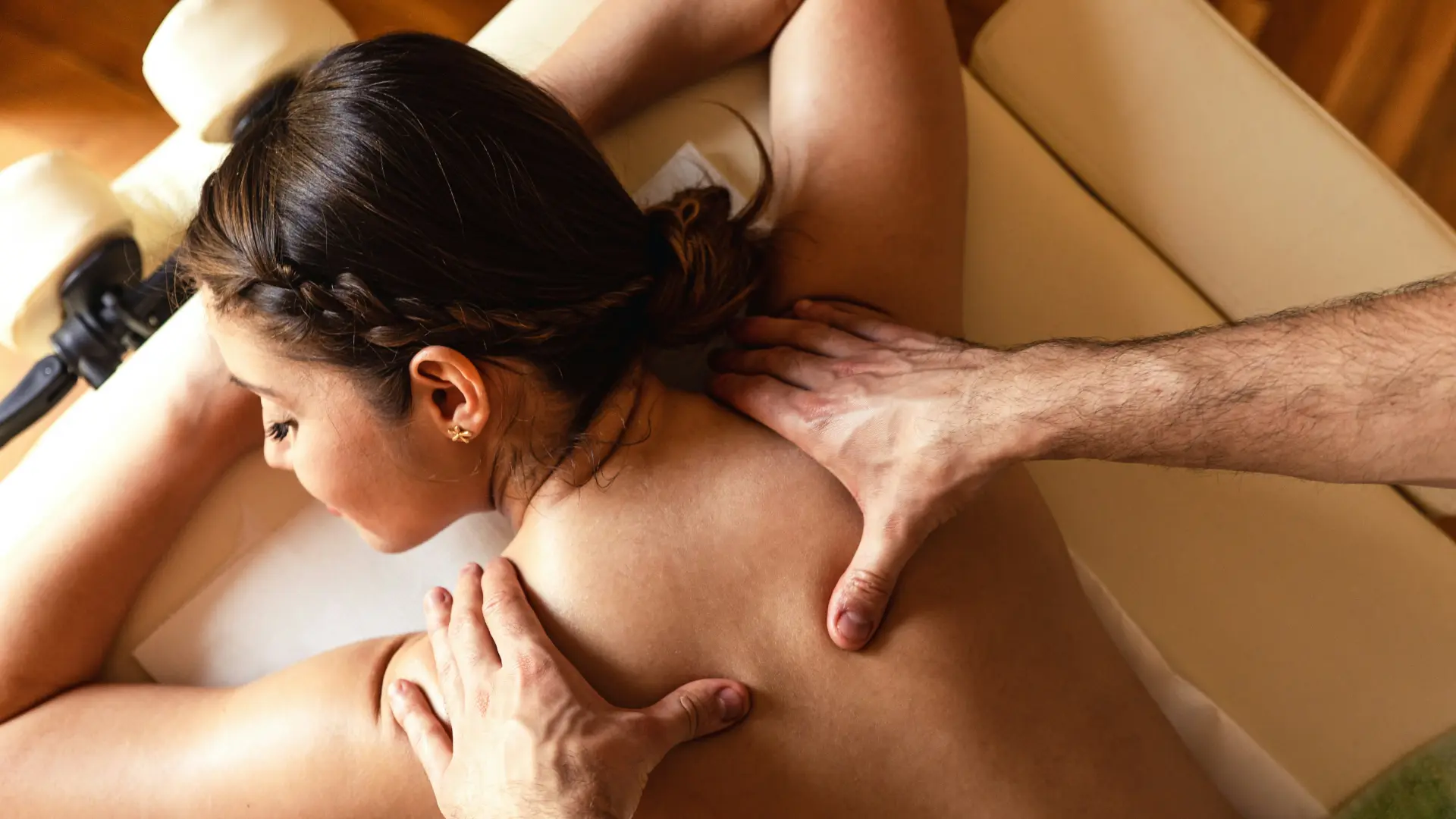

Show your license and training
State your license type and number, your training, and how long you have practised.
This matters more in massage than in most services, because the category includes businesses that have made some clients wary of the whole profession. A licensed professional saying so plainly, near the top of the page, separates you immediately.
Name any specialist certifications separately, particularly prenatal, oncology or sports work, since clients seeking those specifically will look for them and referring practitioners will too.
If you belong to a professional association, include it. It is a small signal and it costs nothing to add.
Put it somewhere a nervous first-timer will actually see it rather than on a separate about page. The reassurance is needed before they decide to book, not after.
Photograph the actual room
Not a stock image. Your room, your table, your entrance, your waiting area.
A first-time client is trying to picture where they are going, and stock photography tells them nothing except that you bought a template.
Photograph it as a client sees it when they walk in. Clean, calm, well lit, table made, nothing in frame you would not want them to see.
Show the journey if you can: the building exterior, which door, the waiting area, then the room. For a home practice or a shared suite this matters even more, because arriving somewhere ambiguous is genuinely uncomfortable.
Real photos of an ordinary, tidy room do more for booking rates than any other image you could use, and they are free.
Explain exactly what happens in a first session
This is the section that converts, and almost nobody writes it.
Walk through it in order:
- How early to arrive
- What the intake form asks and roughly how long it takes
- What happens about clothing, and how draping works
- Whether you leave the room while they get on the table
- Whether you talk during the session, and that either is fine
- That they can ask for more or less pressure at any point
- What to do afterwards
Nobody cancels because the price was too high. They cancel because they were not sure what they were walking into.
Every item on that list is something a first-timer is too self-conscious to ask. Answering them in advance removes the hesitation you never get to hear about.
Related Guides



Give the exact location, entry and parking
Suite 204 is not enough.
Which building, where to park, which door, whether there is a lobby, whether to wait or knock, and what to do if the door is locked.
For a home practice or a shared suite this matters more, not less. Arriving somewhere ambiguous and standing outside wondering whether you have the right place is a bad start to an appointment about relaxation.
A photo of the entrance is worth more than an address. People navigate visually when they arrive somewhere new.
Mention public transport and accessibility if relevant, including stairs, since a client with mobility issues needs to know before they book rather than on arrival.
Include it in the confirmation email as well as on the site.
Online booking with real availability
Massage is booked at odd hours by people who do not want to talk to anyone.
Real-time availability with online booking will substantially out-convert a contact form or a phone number alone. Show your actual openings rather than a request form that starts a conversation.
Keep the booking flow short. Service, length, time, name, contact, card if you take one. Every extra step loses people.
Let clients choose the practitioner if there is more than one, and let them note anything relevant in a free text field, since some people find it easier to mention something in writing than in the room.
Make rescheduling possible online too. A client who cannot easily move an appointment often just disappears, and keeping someone who rescheduled twice is better than losing them.
State your policies plainly and kindly
Say your cancellation window, your late arrival policy, and any deposit requirement, in normal language.
The wording matters. A policy written kindly reassures a client that you run a professional practice. One written defensively reads as hostile before the relationship has started.
Explain the reason briefly. For a solo practitioner an unfilled hour cannot be recovered, and most clients understand that immediately when it is put that way.
Also cover what happens if they are unwell, since asking someone to choose between a cancellation fee and turning up sick is a bad policy for everyone.
Clear policies protect a solo practitioner's income and, written well, actually reduce cancellations, because people who understand an arrangement complain about it less.
Modalities described plainly. Prices published. License visible. Real photos of your room. A full first-session walkthrough. Precise directions. Online booking. Policies stated kindly.
Eight things, and most massage sites do three. Every one of them removes a reason for a nervous first-timer to close the tab.
Action Plan
- List every modality with a one-line description of the experience rather than the effect.
- Publish all session lengths and prices, plus any packages.
- Add your license type, number and training near the top of the page.
- Replace every stock image with photos of your actual space, including the entrance.
- Write a full first-session walkthrough covering arrival, intake, draping and afterwards.
- Add exact entry and parking directions, with a photo of the door.
- Turn on online booking with real-time availability and online rescheduling.
- Rewrite your cancellation policy in plain, warm language with a brief reason.
Not sure which gap is costing you bookings? Take the free Marketing System Scorecard. Twelve questions, about a minute, and you get your score plus your three biggest gaps on the page, no email required.
The Massage Therapy BrandPack includes the website, online booking, intake forms, reminders and rebooking messages already set up. Start free for 14 days, then $97 a month, no setup fee, cancel anytime. It also includes the full Counselor, Doula and Nutrition BrandPacks at no extra cost.
Frequently Asked Questions


