
Marketing for Tree Service Businesses
Tree work is bought on fear of damage. Here is how to remove that fear before the storm hits.
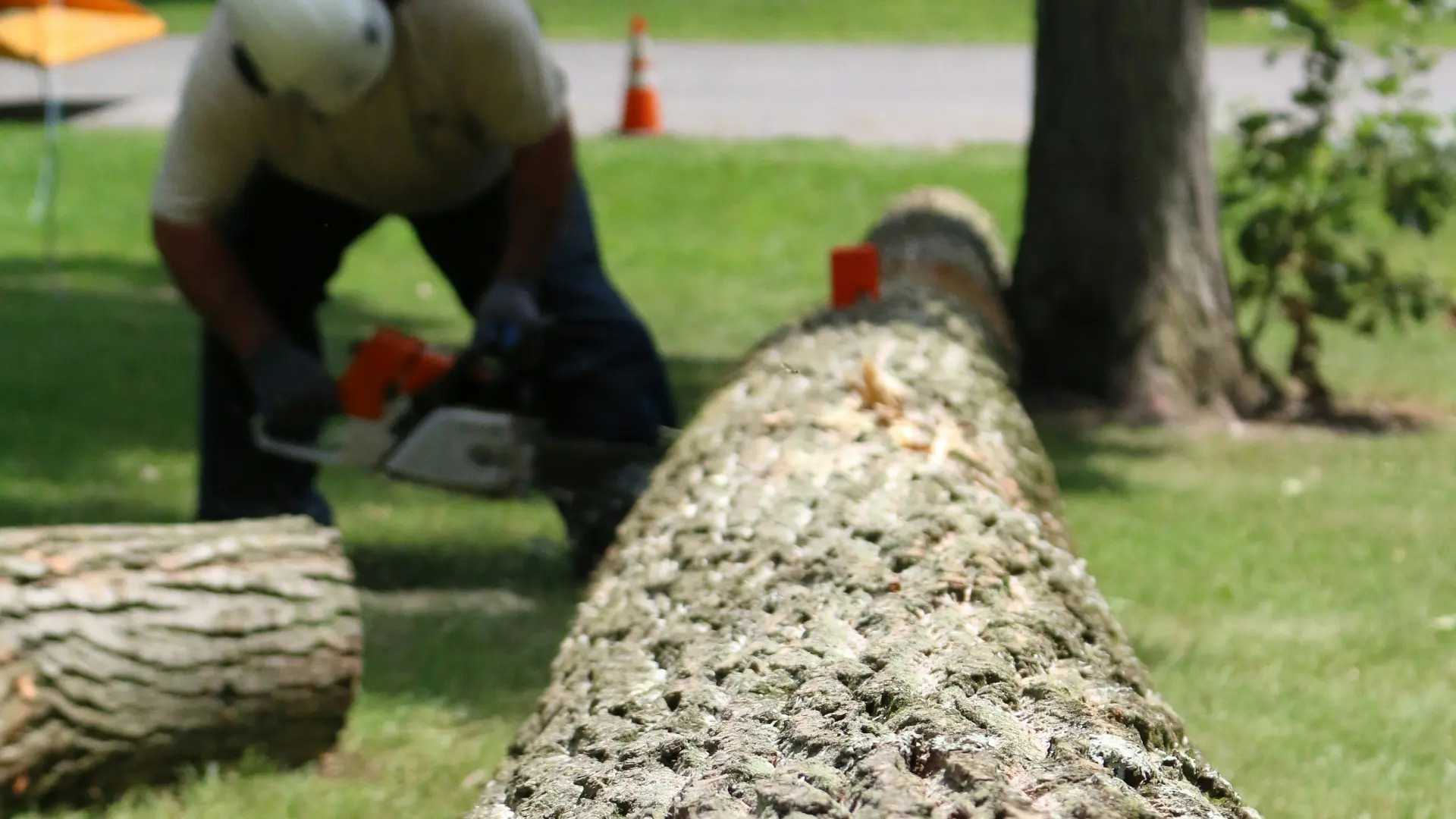
Tree service has a marketing shape unlike any other trade. High job values, almost no repeat business, and demand that arrives with the weather rather than with the calendar.
Nobody needs the same tree removed twice. So you are not building a customer base. You are making sure that when a tree finally becomes a problem, you are the company that gets called.
And there is one more thing that makes this trade different. In most home services the customer worries about being overcharged. Here they worry about a limb through the roof, a crushed fence, and an argument with an insurance company.
Everything below follows from those three facts.
The customer is buying risk removal, not tree removal
Before any channel decision, understand what the homeowner is actually deciding.
They have a large object near their house that they believe is dangerous. They are about to authorize a stranger with a chainsaw to take it down in pieces, over a roof, near power lines, above a garden they care about.
The question in their head is not what will this cost. It is what happens if this goes wrong.
In tree work, fully insured is not a trust badge. It is the product.
That single insight reorders your whole website and every conversation. Insurance and workers compensation belong in the top section of the home page, not on an about page. Certification, if you hold it, belongs beside it. Photographs should show how little space there was between the tree and the structure.
Companies that lead with years in business and quality workmanship are answering a question nobody asked.

Get found: local search plus the geography of the job
Most tree jobs begin one of two ways. A local search, or a neighbour pointing at a house down the street.
The search half. Tree removal near me returns a local map with three companies. Complete Google Business Profile, service area by town name, before and after photos, steady reviews. Post after storms, because search volume peaks within hours and Google favours recent activity.
The geography half. A crane in a front yard is a public event. Everyone on that street sees it, and a proportion of them have a tree they have been worrying about for two years.
Card the nearest four or five houses while the job is underway, not afterwards. Tree work clusters geographically more than almost any trade, and one visible removal should produce two more on the same street.
Related Guides



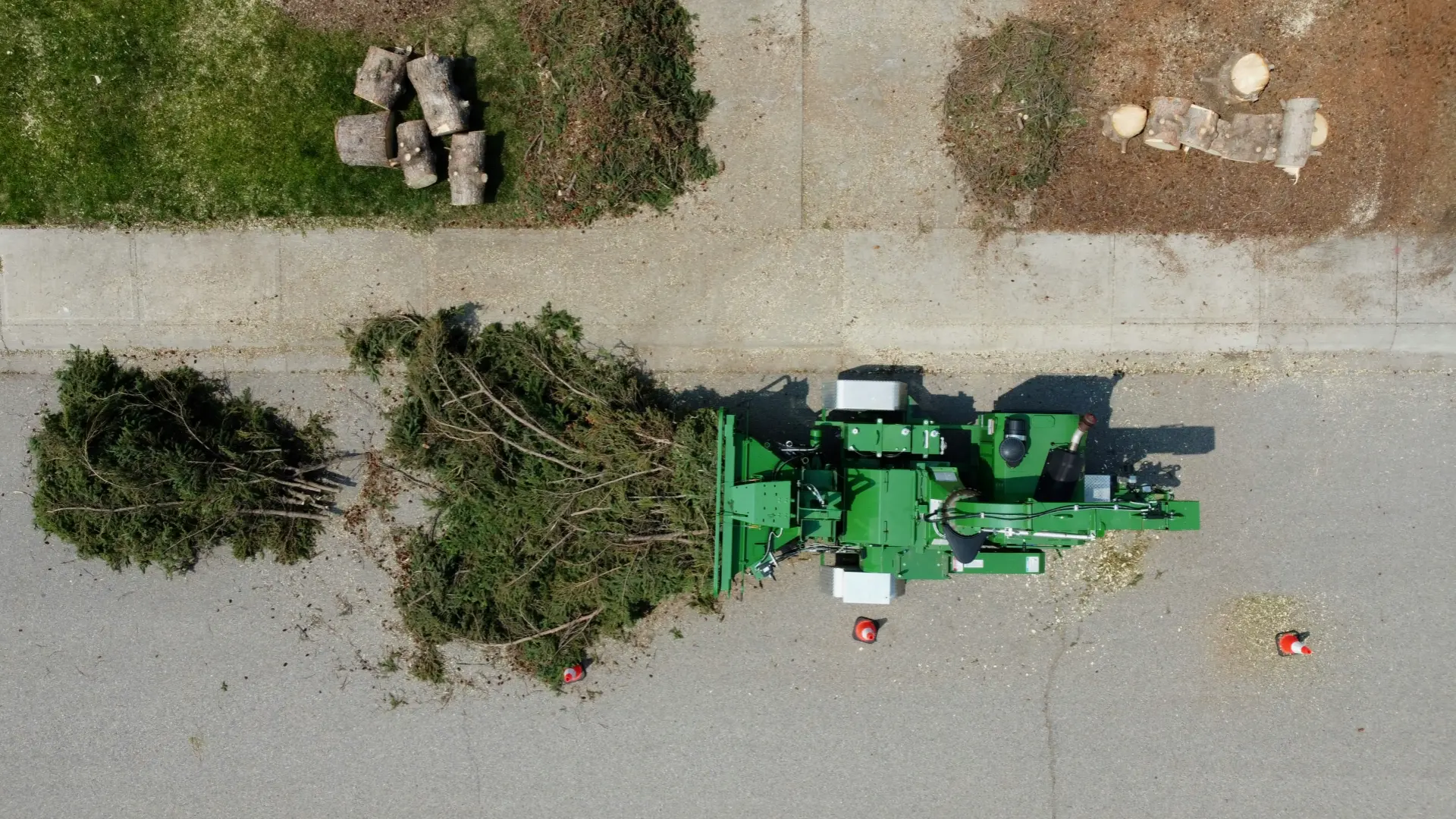
Get trusted: what actually removes the fear
The website's job is answering the damage question before the homeowner has to ask it.
- Insurance and workers compensation, stated at the top, with an offer to provide a certificate
- Arborist certification, if you hold it, with one line explaining what it means
- Wide before photos showing the tree next to the structure, which is the exact image in their head
- Clean-yard afters. The second fear is being left with a garden full of debris
- Named local reviews, prioritizing the ones that mention cleanup and care around the property
- A quote form that accepts photos, since pricing depends on things you have to see
The clean-yard photo is the one most companies skip and it does more work than the removal shot. The removal proves capability. The tidy garden proves you will not leave them with a problem.
Be ready before the weather, because storm work goes to whoever answers
Every tree service knows the pattern. Three quiet weeks, then a storm, then more calls in forty-eight hours than the previous month.
The companies that do well are not the ones with the biggest ad budget. They are the ones already set up when the phone starts.
A homeowner with a limb on the roof calls three numbers and books the first one that picks up. That is the entire competitive dynamic.
What readiness looks like
- Decide in advance who answers during a storm event
- Set an automatic text reply stating your response window, so a missed call is not a lost job
- Have a Google Business Profile post pre-written so it can go out in two minutes
- Have a triage rule: trees on structures, blocking access, or threatening power come first
Related: How Tree Services Win Storm Work Without Chasing It
Capture the calmer half of storm demand
Here is what most companies miss while chasing emergencies. Most storm callers do not have an emergency. They have a tree that frightened them.
Those are excellent scheduled jobs at normal margin, and they are considerably easier to deliver than an emergency at nine at night in the rain.
So triage openly. Tell the people you cannot reach today when you can, rather than leaving them waiting. Take the details, book them for the following weeks, and follow up.
Then two weeks after the event, contact every quote you issued and never closed. A storm generates quotes faster than anyone can convert them, and the urgency fades on both sides while the tree does not.
Reference the specific tree when you follow up. Naming the leaning oak by the driveway reminds them exactly what they were worried about.
Related Guides


Sell the dormant season, which almost nobody does
This is the most underused marketing opportunity in the trade.
Late autumn through winter dormancy is generally better for structural pruning and many removals. The tree is inactive, the canopy is bare so defects are visible, and the ground is often firmer so equipment does less damage.
Almost no homeowner knows any of that.
Explaining it does two things. It creates demand in what would otherwise be your quietest months, and it positions you as an advisor rather than a company that turns up after storms.
Confirm the specifics for your region and species, since timing considerations vary. But the marketing point holds: a company that tells homeowners winter is the better time to do this is having a completely different conversation from one waiting for the phone to ring.
Plan that campaign in early autumn, not in January when the phone has already gone quiet.
Where tree work overlaps with the rest of the yard
Plenty of tree services take cleanup, lot clearing and general yard work, particularly between peaks. If that is you, the marketing overlaps more than you would expect.
The same local search rules apply across all of it, and the seasonal calendars complement each other neatly. Tree work peaks when lawn work slows, and lot clearing fills the gaps in between.
Referral partners work the same way in both directions. Landscapers, lawn care companies, roofers and fence installers all encounter trees they do not handle, and you encounter yards needing work you would rather pass on.
Related: Marketing for Landscaping Businesses and Marketing for Lawn Care Businesses.
The order I would build it in
Because demand is spiky, readiness before a peak beats spending during one.
- Complete the Google Business Profile with ten before and after sets, and gather reviews.
- Put insurance and certification at the top of the home page.
- Set up storm readiness: who answers, the automatic text reply, the pre-written post, the triage rule.
- Print neighbour cards and use them at every large removal.
- Introduce yourself to three landscapers and two roofers.
- Build a follow-up habit for unclosed quotes at two weeks.
- Plan the dormant season pruning campaign in early autumn.
- Concentrate paid spend into storm windows and the dormant season, not evenly across the year.
Steps two and three cost almost nothing and decide most of what happens in the week after a storm.
Answer the damage question before it is asked. Be findable when someone searches at seven in the morning after a storm. Be reachable when they call. Take the calm half of the demand as well as the urgent half. Then let each visible job sell the next one on the same street.
Tree service marketing is mostly the removal of fear, and mostly done before the weather turns.
Action Plan
- Move insurance and workers compensation coverage to the top of your home page.
- Add ten before, after and clean-yard photo sets to your website and Google Business Profile.
- Ask your last ten customers for reviews, encouraging them to mention cleanup.
- Decide who answers during a storm and set up an automatic text reply.
- Draft your storm response post now so it can be published in two minutes.
- Print neighbour cards and hand out five at your next large removal.
- Contact every unclosed quote from the last storm event.
- Plan a dormant season pruning campaign for autumn.
Not sure whether reachability or visibility is your weak point? Take the free Marketing System Scorecard. Twelve questions, about a minute, and you get your score plus your three biggest gaps on the page, no email required.
If you would rather have it built, the Tree Service BrandPack includes the website, quote request with photo upload, missed-call text back, review requests, seasonal campaigns and social content. Start free for 14 days, then $97 a month, no setup fee, cancel anytime. It also includes the full Handyman, Lawn Care and Landscaping BrandPacks at no extra cost.
Frequently Asked Questions


