
Social Media for Tree Service Companies: What Actually Builds Trust
The most visually convincing trade there is. Most companies just photograph the wrong thing.

Most trades have to work to make their content interesting. You do not.
A seventy foot dead oak leaning over a garage, then an empty lawn, is compelling to almost anyone. The problem is not material, it is consistency and knowing which shots actually matter.
Most tree companies post close-ups of chainsaws and chippers. Those are interesting to other tree people and useless to a homeowner.
The wide shot is the money shot
A close-up of a saw means nothing. A wide photo showing the tree, the house, and how little space there was between them means everything.
That is the exact image in a worried homeowner's head when they think about hiring you. Showing that you have done it before, next to a roof, and finished clean, is the whole argument.
Take the before shot before you start. That is the step everyone forgets, and by the time you remember there is nothing left to photograph.
Put a reminder in your phone if you have to. Wide before, wide after from the same position, then the clean yard.
Same angle for before and after matters more than photo quality. The comparison is what does the work, and a phone photo from the same spot beats two beautiful images from different ones.

Always show the cleanup
The second fear after property damage is being left with a yard full of debris, rutted turf and sawdust in the flower beds.
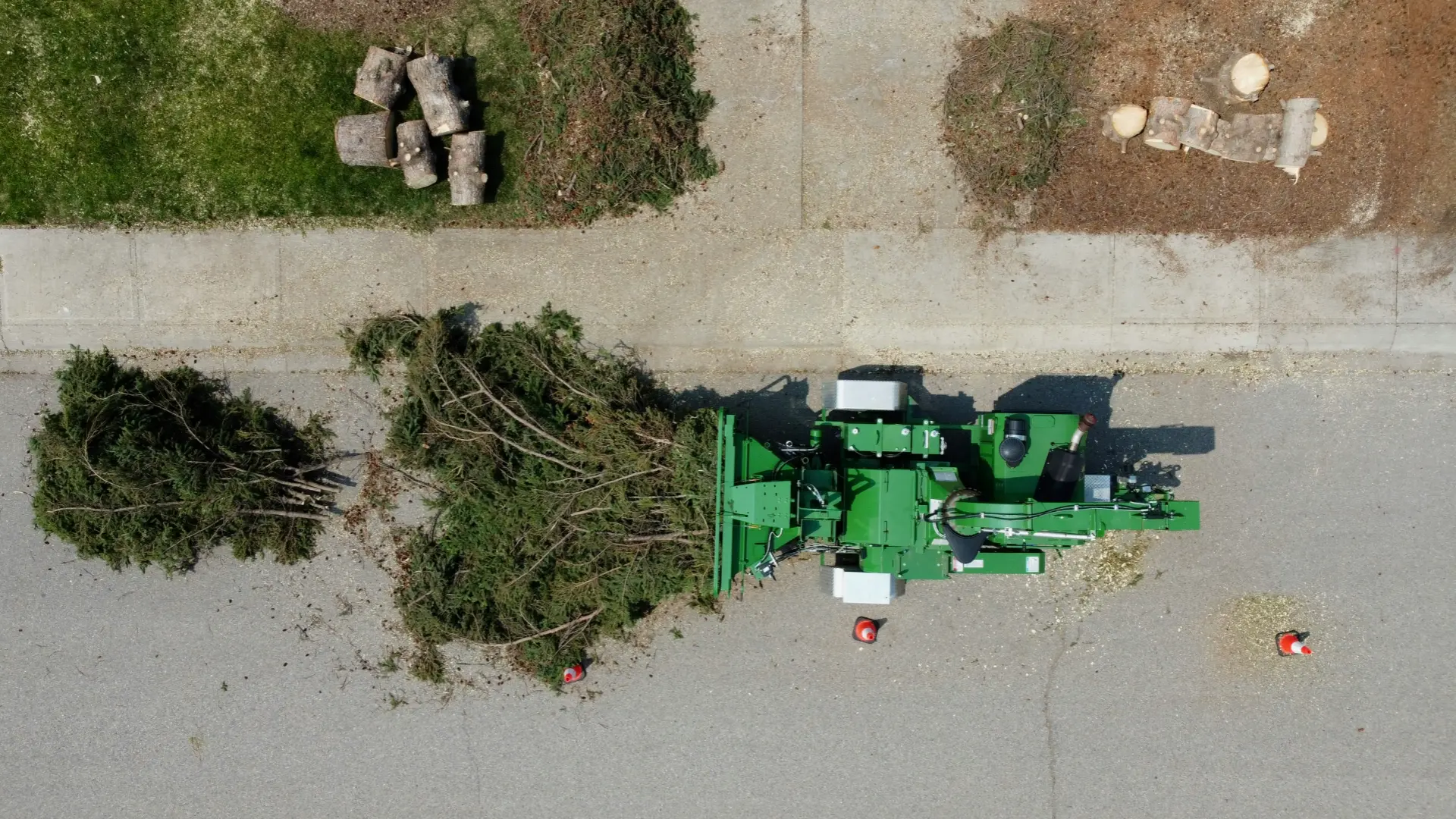
So end every set with a clean-yard photo. No offcuts, no branches on the fence, no ruts across the lawn.
The removal sells the capability. The clean yard sells the company.
This is the single most underused shot in the trade. Companies post the dramatic part and skip the reassuring part, when the reassuring part is what closes the sale.
If you protected something during the job, show that too. Plywood over a lawn, boards under outriggers, a tarp over a garden bed. Homeowners with a garden they care about will notice, and nobody else is showing it.
Related Guides


Explain what a tree is telling you
Short posts explaining warning signs earn saves and shares, and they generate calls from people who did not know they had a problem.
What a fungal shelf on a trunk means. Why a leaning tree is not always dangerous, and when it is. What a dead limb over a driveway costs to ignore. Why a split in a main union matters. What storm damage looks like a month later.
This positions you as an advisor rather than a vendor, which matters on a job of this size and price.
Keep it short and plain. Thirty seconds of video or a photo with three sentences.
Avoid diagnosing a specific tree from a comment, since that is a liability and an inaccurate answer travels. Invite them to send photos instead.
Post the difficult jobs
Complex removals near power lines, over pools, between houses, or with no equipment access are your proof of skill.
A homeowner with a difficult tree is specifically looking for evidence that someone has handled a difficult tree. They are not comparing prices, they are looking for competence, and this is where you earn the higher-value jobs.
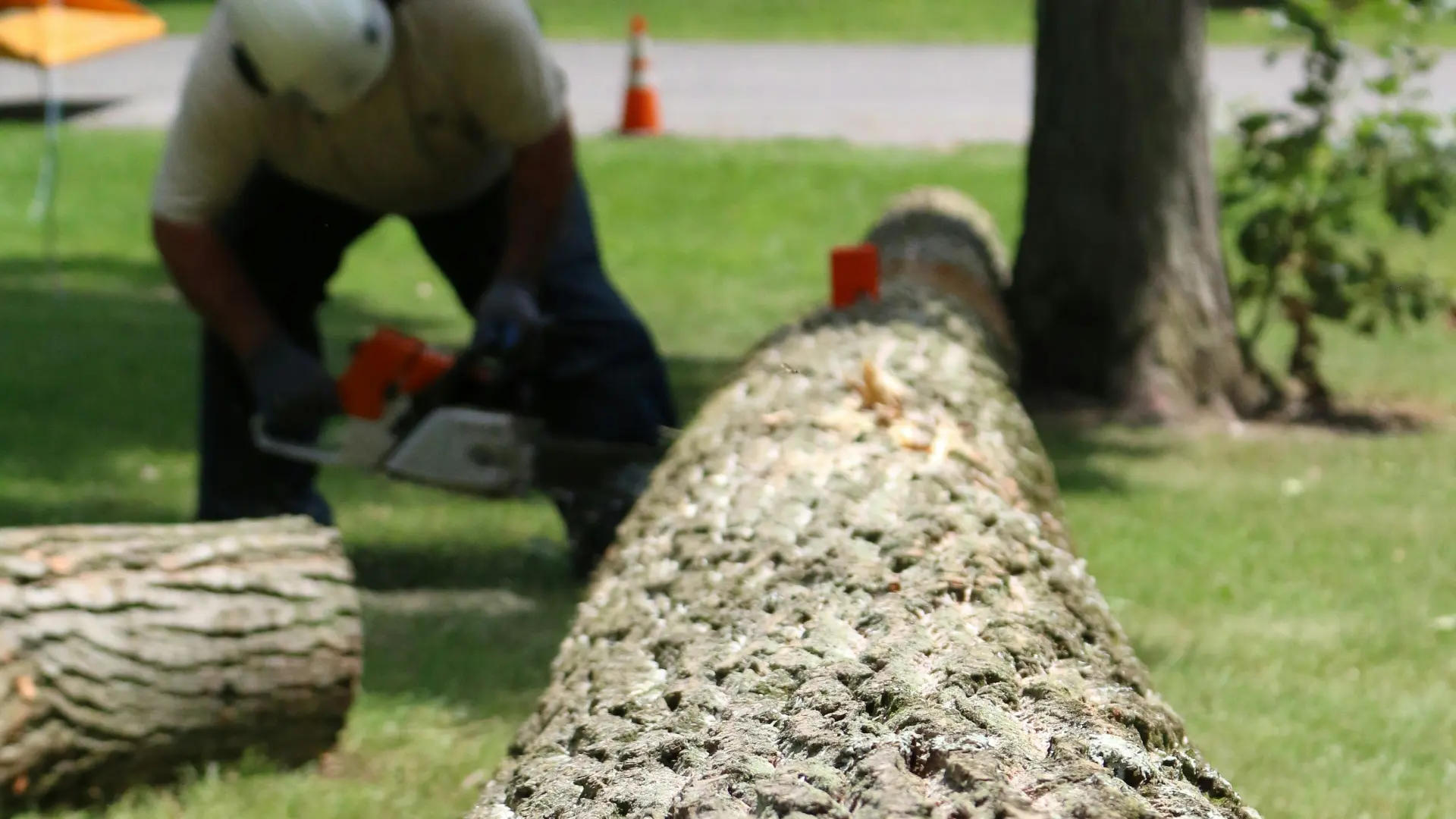
Show the rigging, the crane work, the sectional dismantling. Explain in a sentence why it had to be done that way.
Two cautions. Do not post anything that looks unsafe or non-compliant, because other professionals will notice and homeowners increasingly know what to look for. And do not post work near energized lines unless you are properly qualified for it.
Crew in full protective equipment, every time. It signals a professional operation and it is what an insurer or a commercial client would expect to see.
Storm content, handled carefully
After a storm, demand spikes and so does attention. Posting your response work is legitimate and useful, and it is also the moment to be careful.
Focus on the response and the resolution rather than on the damage. Show the tree being removed and the property made safe, not the destruction.
Never post an identifiable damaged property without permission. People whose house has just been hit are having one of the worst weeks of their lives, and seeing it on a contractor's feed is a genuine harm as well as a reputational risk for you.
Avoid anything that reads as profiting from a disaster. Practical and calm works. Dramatic does not.
What is genuinely useful in that window: what to do while waiting, what not to touch, and when to call the utility rather than a tree company.
Related Guides


Facebook and Google first
Neighbourhood groups drive tree work more than any other platform, because a large removal on a street gets noticed by everyone on it and the conversation happens there.
Be present in the groups covering the areas you work rather than across the whole metro. Answer questions, including when the answer is that the tree is probably fine.
Your Google Business Profile is the second home for the same photos, and posting there is doubly useful because it feeds local search as well as building trust.
Most tree services never post to the profile at all, which makes it easy ground.
Instagram is optional. It suits companies doing visually striking work and it is not where most local hiring decisions happen.
Two posts a week, on two platforms, using photos you already took.
Make the habit survive a busy week
The reason most tree service accounts go quiet is not disinterest. It is that a storm week leaves nobody with energy to post.
So separate the capture from the publishing.
Capture constantly. Wide before, wide after, clean yard, on every job. It takes ninety seconds and it becomes automatic.
Publish in batches. Sit down once every two weeks, pick six photos, write short captions, and schedule them.
That way a busy fortnight does not create a gap, because you are publishing from a backlog rather than from this week.
Caption formula that works: what the tree was, what the risk was, how you approached it, and the outcome. Four short lines.
Name the town. It helps local search and it tells neighbours you work nearby.
Wide before shots showing the structure. Clean yards every time. One warning-sign explanation a week. The difficult jobs. Storm response handled with care.
Capture on every job, publish in batches, twice a week, on Facebook and your Google profile. The material is already in front of you.
Action Plan
- Take a wide before shot showing the tree and the nearest structure on your next three jobs.
- Take a clean-yard photo at the end of every job, from the same angle as the before.
- Post one complete before, after and cleanup set this week.
- Record one thirty-second explanation of a tree warning sign.
- Post the same photos to your Google Business Profile.
- Join the neighbourhood groups covering the areas you actually work.
- Batch six posts every two weeks and schedule them.
- Set a rule about storm content: response and resolution only, never an identifiable property without permission.
Not sure whether visibility or trust is your weak point? Take the free Marketing System Scorecard. Twelve questions, about a minute, and you get your score plus your three biggest gaps on the page, no email required.
The Tree Service BrandPack includes 52 ready-to-post pieces of content written for tree work, plus the website, quote requests and review automation. Start free for 14 days, then $97 a month, no setup fee, cancel anytime.
Frequently Asked Questions


