
What Should a Tree Service Website Include?
Why insurance belongs at the top of the page, and what else a worried homeowner needs to see.

Tree work is one of the few home services where the customer's biggest fear is not being overcharged.
They are picturing a limb through the roof, a crushed fence, and an argument with an insurance company. That is the actual decision sitting in front of them, and it is why so many people leave a dangerous tree standing for two more years.
Your website's job is to remove that fear before anything else. Here is the checklist in the order it matters.
Lead with insurance, not with experience
Put liability and workers compensation coverage in the top section of the home page. Not buried on an about page, not in the footer.
State that you carry both, and offer to provide a certificate on request. That last part matters, because some operators say fully insured and mean a minimal policy. Being able to produce documentation separates you immediately.
In tree work, fully insured is not a trust badge. It is the product.
Explain briefly why it matters, because many homeowners do not know. If an uninsured worker is injured on their property, or a limb damages a neighbour's structure, the homeowner can find themselves exposed.
Companies leading with years in business and quality workmanship are answering a question nobody asked. The informed customer checks insurance first, and the uninformed one is reassured to be told about it.

Show certification, or lead harder on what you do have
An arborist credential separates you from a truck and a chainsaw, and most homeowners have heard of certification even if they cannot name the body.
If you hold it, say so plainly and explain in one line what it means: that it required passing an exam on tree biology, pruning practice and safety, and that it requires ongoing education.
That single sentence does more than the acronym, because the letters alone communicate nothing to someone hiring for the first time.
If you do not hold it, do not fake around it. Lead harder on insurance coverage, years in operation, equipment, and a strong photo library of completed removals. Those establish credibility perfectly well for straightforward removal and trimming work.
Name any specialist qualifications separately, particularly for utility line clearance, since that is a distinct competence and homeowners near power lines ask about it.
Related Guides


List services specifically, including what you refuse
Removal, trimming and pruning, stump grinding, storm and emergency response, deadwooding, cabling and bracing, lot clearing, land clearing.
Specific lists help a homeowner recognize their exact problem, and they help you appear for the search that names it. Someone typing stump grinding plus a town is looking for one service, not for a tree company generally.
Then say what you do not do. Many tree services do not handle utility line clearance, and saying so is a mark of competence rather than a limitation.
Also state whether stump grinding, debris removal and log haulaway are included or priced separately. These are the three most common sources of dispute in the trade, and answering them on the website prevents the conversation happening after the work.
If you have a minimum job size, say it. It saves both sides an estimate visit.
The wide before shot, and the clean yard after
Tree work is the most visually convincing trade there is, and most companies photograph it badly.
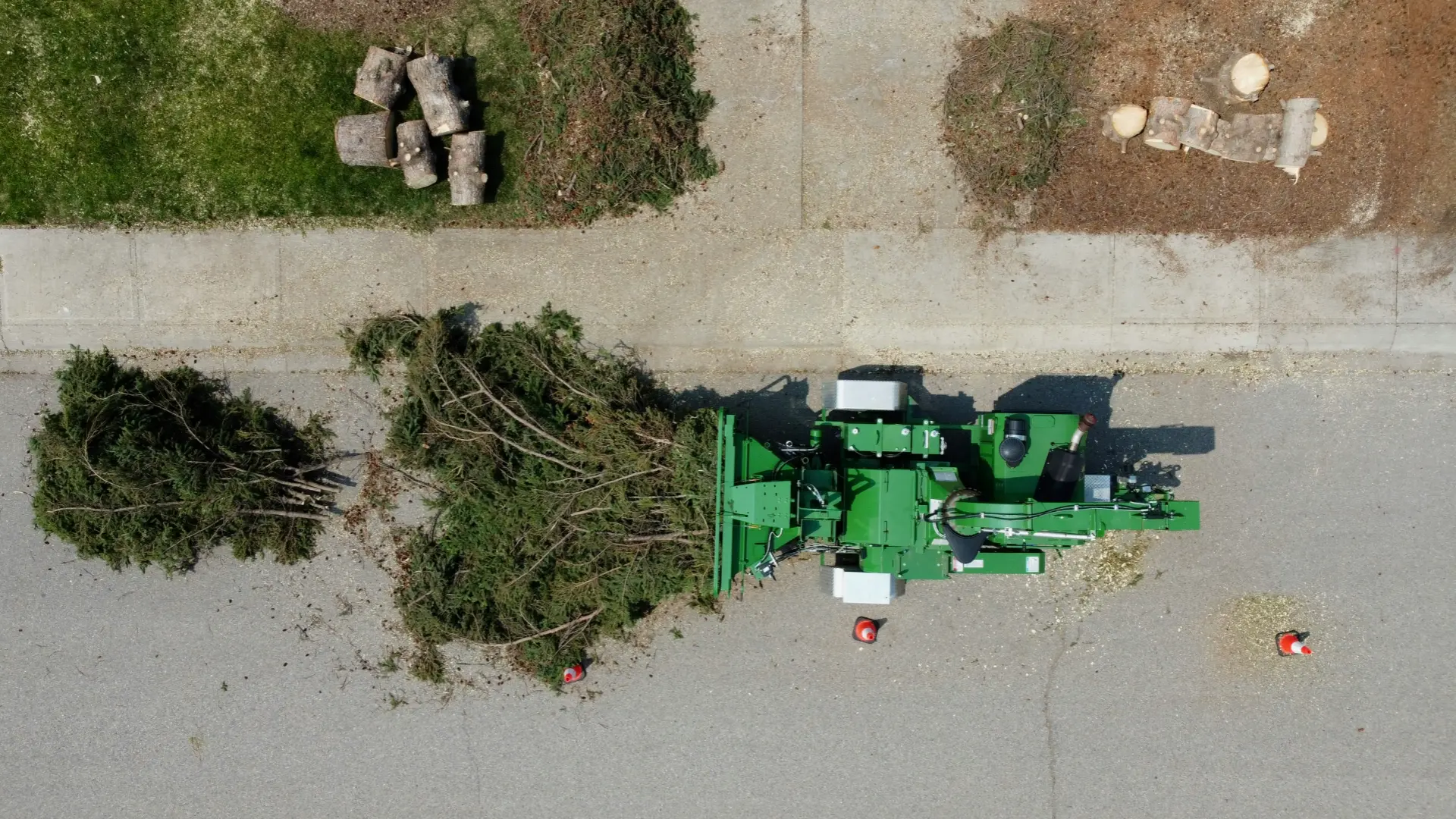
The wide before shot is the money shot. Not a close-up of a chainsaw. A wide photo showing the tree, the house, and how little space there was between them. That is exactly the image in the worried homeowner's head, and seeing you have done it before next to a roof is the whole argument.
Take it before you start. That is the step everyone forgets, and by the time you remember the tree is already down.
Then always show the clean yard. The second fear after damage is being left with a garden full of debris and rutted turf.
The removal proves capability. The tidy yard proves you will not leave them with a problem. Most companies show the first and skip the second.
Six to ten complete sets beats fifty single images.
Named local reviews, prioritized for cleanup
Reviews with a first name and a neighbourhood read as real. Two or three on the home page, near the services list, rather than all of them buried on a testimonials page.
Prioritize the reviews that mention cleanup and care around the property, because those are the ones answering the actual fear.
A review saying they left the yard cleaner than they found it, or that they protected the fence and the flower beds, is considerably more persuasive to the next customer than one praising speed or price.
Reviews naming the type of work do double duty, since they also help you surface for that search. A review mentioning a large oak removal near a house works twice.
Ask when the site is tidy and the customer is looking at the finished result, then send the link by text before you leave.
Related Guides


A quote form that accepts photos
Tree quotes usually require seeing the tree, because proximity, access and condition drive the price more than height does.
So let people send photos with the request. Name, phone, address or neighbourhood, a short description, and photo upload.
This does three things. It lets you give a useful ballpark without driving out. It lets you prioritize which visits to make first. And it filters, because someone who takes two photos is more serious than someone who fills in a name.
Ask for a wide shot showing the tree and the nearest structure, since that is the information you actually need.
Keep the form short. Every extra field costs you enquiries, and you can gather the rest on the call.
Handle emergencies visibly
If you take storm calls, put it at the top with a phone number and a response window.
Storm work is when the highest-intent traffic arrives, and a homeowner with a limb on the roof will not fill out a form. They will call three numbers and book the first one that answers.
State what counts as an emergency for you, roughly how fast you respond, and what hours the emergency number is answered. Honesty here is better than implying twenty-four hour availability you cannot staff.
If you do not take emergency work, say that too, and say what you do take. It prevents wasted calls during the week you are busiest.
A short line about what to do while waiting, such as staying away from the area and contacting the utility if lines are involved, is genuinely useful and reads as competent.
Service area and local permits
List the towns and neighbourhoods you serve by name rather than a radius in miles. That is how homeowners search and how local results get assembled.
Then add something almost no competitor does: mention local tree ordinances.
Many cities protect trees above a certain size or of certain species, and removal may require a permit or an arborist assessment. Homeowners frequently do not know this until they are partway into the process.
If you handle or advise on permits, say so. In a city with protection rules this is a genuine differentiator, it signals you know the local ground, and it removes an obstacle that otherwise stalls the job.
Rules are local and change, so confirm your own before publishing specifics.
Insurance at the top. Certification explained. Specific services and exclusions. Wide before shots and clean yards. Named local reviews mentioning cleanup. A photo-friendly quote form. Visible emergency handling. Towns and permits.
Tree service marketing is mostly the removal of fear. Everything on that list is doing that job.
Action Plan
- Move insurance and workers compensation to the top of your home page, with an offer to provide a certificate.
- Add your certification with a one-line explanation, or lead harder on insurance and experience.
- List services specifically, including what you do not take and what is priced separately.
- Take a wide before shot on your next three jobs, showing the nearest structure.
- Add a clean-yard photo to every completed set.
- Add three named local reviews that mention cleanup.
- Add a quote form that accepts photos, asking for a wide shot.
- Publish an emergency number, response window and your towns by name.
Not sure which gap is costing you jobs? Take the free Marketing System Scorecard. Twelve questions, about a minute, and you get your score plus your three biggest gaps on the page, no email required.
The Tree Service BrandPack includes the website, quote request with photo upload, missed-call text back, review requests and seasonal campaigns. Start free for 14 days, then $97 a month, no setup fee, cancel anytime. It also includes the full Handyman, Lawn Care and Landscaping BrandPacks at no extra cost.
Frequently Asked Questions


